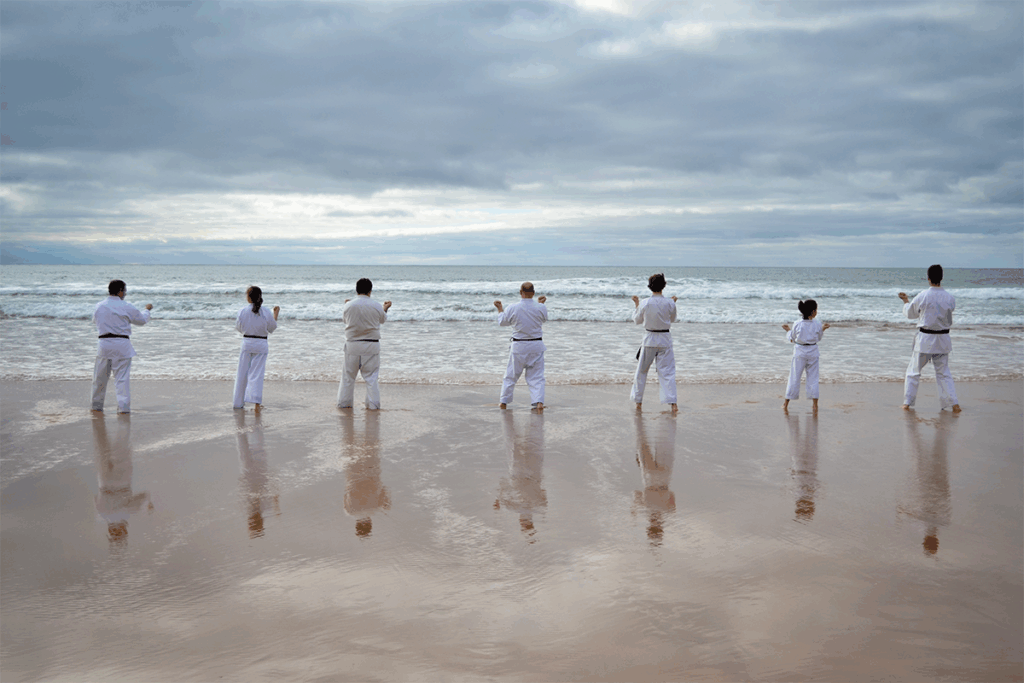
Karate, to many, might appear as a sport—full of fast punches, high kicks, and choreographed movements. But for those who truly embrace its teachings, karate is far more than a competitive activity or physical discipline. It is a lifelong journey of self-improvement, mental clarity, and spiritual development. At its core, karate is a way of life—a philosophy that extends beyond the dojo into every aspect of daily living.
Beyond Physical Strength
Karate undoubtedly builds physical strength, endurance, balance, and coordination. Regular training conditions the body, sharpens reflexes, and improves overall health. Students learn powerful stances, precise strikes, controlled blocks, and defensive maneuvers. But unlike many modern sports, karate does not rely on strength alone.
True karate emphasizes efficiency over brute force, teaching practitioners to generate maximum impact with minimal effort. Through proper breathing, posture, and technique, energy is channeled through every movement. The result is a graceful yet formidable form of self-defense that prioritizes control and restraint.
The ultimate goal is not to overpower opponents, but to develop mastery over one’s own body—and, more importantly, over one’s reactions and emotions.
Self-Discipline and Self-Control
What sets karate apart from most sports is its deeply embedded discipline. Training is not just about learning techniques; it’s about cultivating the character to use those techniques wisely and responsibly.
Karate-do, meaning “the way of the empty hand,” teaches practitioners to be calm, focused, and respectful. From bowing in the dojo to observing silence during meditation, every ritual in karate fosters humility and mindfulness.
The dojo becomes a place where ego is left at the door, and each individual commits to continuous improvement—not to defeat others, but to better oneself. In this way, karate becomes a mirror, reflecting one’s strengths, weaknesses, fears, and determination. It instills a kind of discipline that shapes how one handles stress, anger, and confrontation—not just in sparring, but in real life.
Karate as a Personal Journey
Karate is not a team sport. It is an individual journey where each practitioner advances at their own pace. There’s no dependence on teammates to win or lose a game—there’s only you, your effort, and your dedication.
This personal focus makes karate a uniquely introspective path. You are your only opponent. You compete against your past self. Each punch, each kata, each belt earned represents a step toward self-mastery. As you strive for physical improvement, you inevitably develop emotional resilience and mental strength.
This journey cultivates confidence—not the loud, boastful kind, but a quiet, unwavering self-belief that grows from facing challenges and not giving up.
Mental and Spiritual Development
One of karate’s greatest gifts is its ability to unify body, mind, and spirit. This concept is rooted in traditional martial arts philosophy and particularly the samurai code of Bushido, which emphasizes honor, courage, benevolence, respect, and loyalty.
Karate practice includes meditation and breathing exercises that promote mindfulness and calmness. These aspects train the practitioner to be aware of their emotions, to manage anxiety, and to maintain clarity under pressure. True karate begins with peace and only resorts to action when absolutely necessary.
The greatest victory in karate is not winning a fight—it is resolving a situation without violence. Karateka are trained to avoid conflict, de-escalate aggression, and remain composed. If an attack is unavoidable, a well-trained practitioner can neutralize the threat with a single, decisive technique—not out of anger, but out of necessity.
The spirit of karate is not found in the number of fights won, but in the ability to walk away, to protect without harm, and to act with integrity.
Karate in Everyday Life
Karate principles extend far beyond the dojo. The focus, patience, and discipline developed through training naturally carry over into daily life. Students often report improved concentration at school or work, better emotional control, and a stronger sense of purpose.
Parents observe that children who train in karate show increased respect, maturity, and responsibility. Adults find that it offers a form of stress relief, clarity, and self-reflection often missing from modern life.
In a world filled with distractions, instant gratification, and external validation, karate teaches delayed gratification, humility, and inner peace. It reminds us to slow down, breathe, and focus on the present moment.
Karate as Self-Defense
At its heart, karate is a system of self-defense. It teaches how to defend oneself effectively without weapons. The word “karate” itself means “empty hand,” reflecting the art’s origins as a means for civilians in Okinawa to protect themselves when weapons were banned.
Traditional styles such as Goju-Ryu—which means “hard-soft style”—combine forceful strikes with softer, circular movements. This duality allows for adaptability in real-life situations. Practitioners learn how to use an opponent’s energy against them, how to strike vital points, and how to end a confrontation swiftly and decisively.
Karate’s practicality lies in its simplicity and precision. Skilled karateka can neutralize multiple attackers with just a few well-placed movements. The emphasis is always on control and restraint—avoiding unnecessary harm while ensuring safety.
Karate as Culture and History
Karate is not only a physical or spiritual practice—it is a cultural tradition. Born from the fusion of Chinese martial arts and Okinawan fighting systems, and later refined in Japan, karate carries centuries of wisdom, discipline, and philosophy.
Every movement, bow, and kata (form) honors those who came before. Practicing karate connects the modern-day student to a long line of warriors, teachers, and seekers. The values upheld in karate—respect, honor, perseverance—are timeless and universal.
By preserving these traditions, karate becomes more than self-defense. It becomes a bridge between past and present, between body and soul, and between individuals and the world around them.
Conclusion: A Path to True Strength
In a world obsessed with competition, trophies, and outward achievements, karate offers something deeper: the pursuit of inner strength. It reminds us that the strongest person is not the one who can fight the hardest—but the one who can walk away from a fight with dignity and peace.
Karate teaches us to strive, not to win, but to grow. It challenges us to face our fears, conquer our doubts, and emerge stronger—not just physically, but emotionally and spiritually. It is a practice of humility, balance, and lifelong learning.
For those who walk this path, karate is not a sport. It is a way of life.